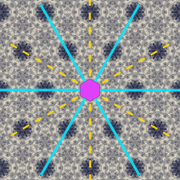
Catch all 17 wallpaper groups.
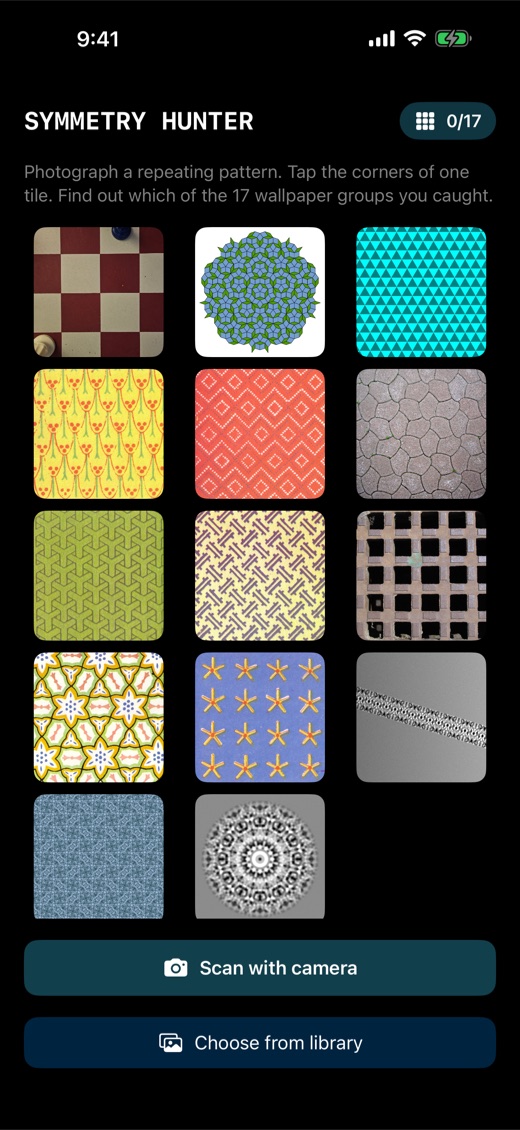
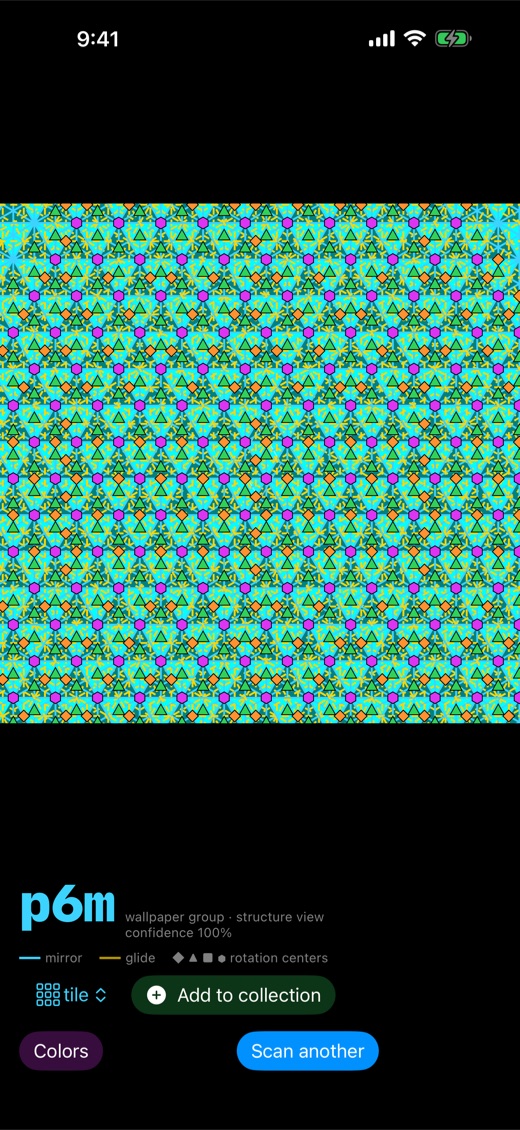
Photograph a repeating pattern — tiles, brickwork, wallpaper, textiles — and find out which of the 17 wallpaper groups you caught, with every mirror, glide, and rotation center drawn on your photo.
Free · one optional in-app purchase · no ads, no account
How it works
Point. Shoot. Classify.
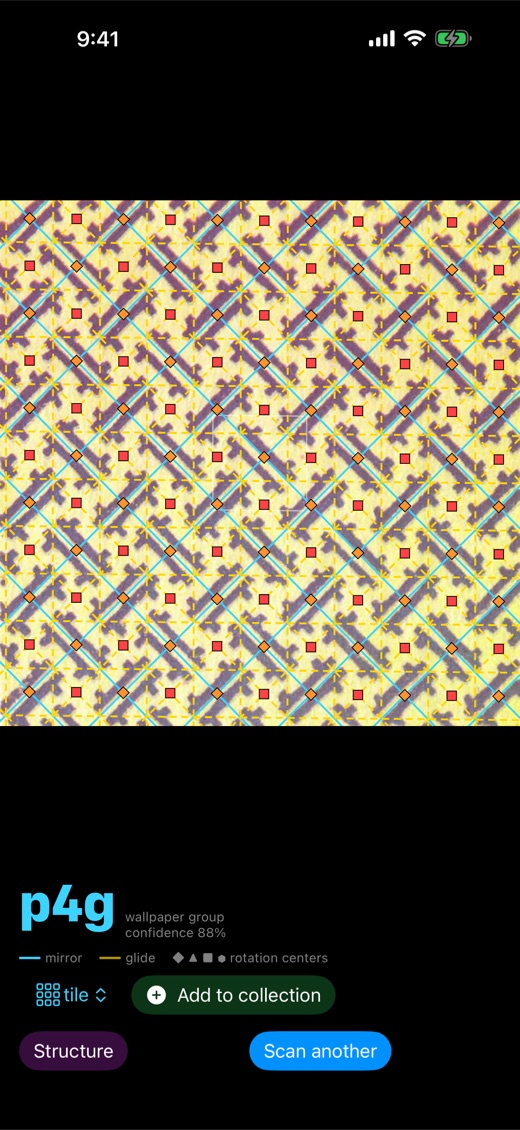
A deterministic geometric engine — not a black-box model — recovers the pattern's lattice, tests every candidate symmetry, and names the group. Entirely on your device.
See the invisible
Mirrors, glide reflections, and 2-, 3-, 4-, 6-fold rotation centers drawn directly on your photo. Flip to Structure view to see the symmetry the colors are hiding.
Collect them all
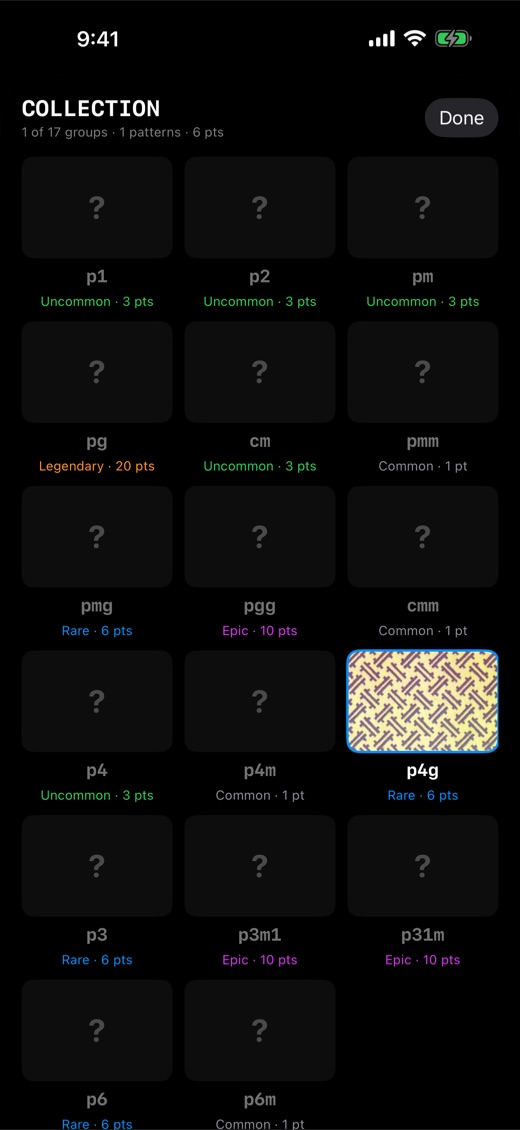
17 wallpaper groups, 7 frieze groups, and rosettes. Rarity follows reality: p4m is everywhere, a wild pg is a trophy.
Private by design
No account, no ads, no tracking, no photo uploads. Your finds and their locations stay on your phone unless you opt in to the registry.
The mathematics
Every flat pattern that repeats in two directions has exactly one of 17 possible symmetry structures. Read the theorem and the overview, or go straight to a group:
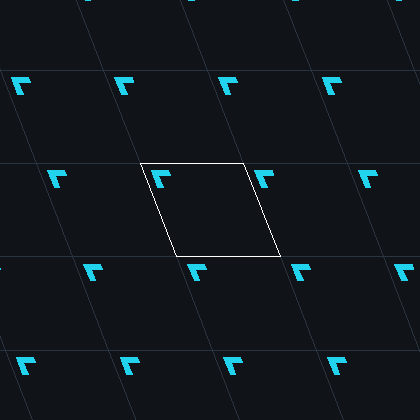
Translations only — the plainest repeat there is.
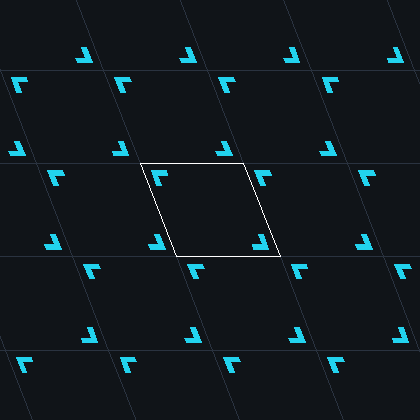
Half-turns only: four kinds of 2-fold center, no mirrors.
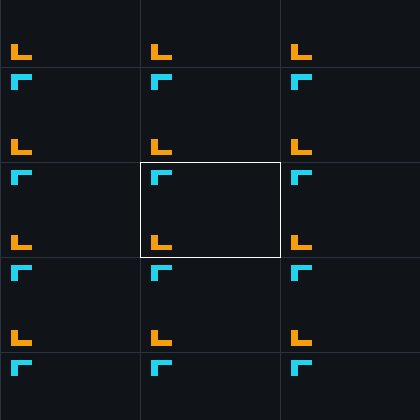
Parallel mirrors and nothing else.
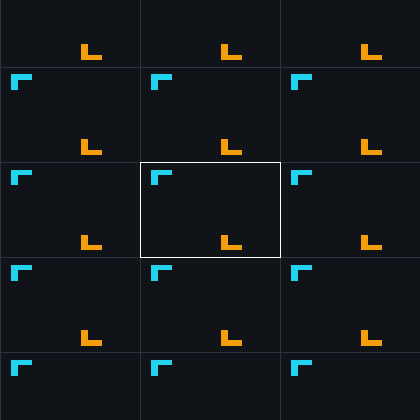
The glide-only group: footprints in snow, extended to the whole plane.
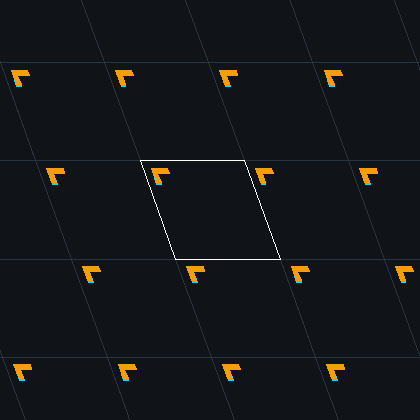
Mirrors in one direction with glides slipped in between.
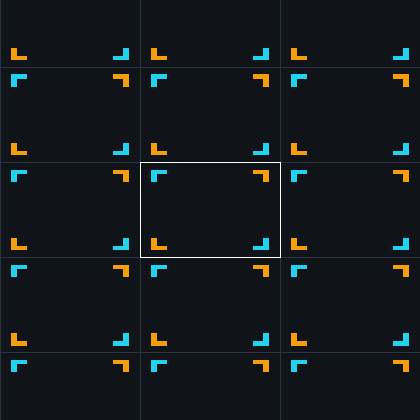
The rectangular grid: mirrors both ways, every center on a mirror.
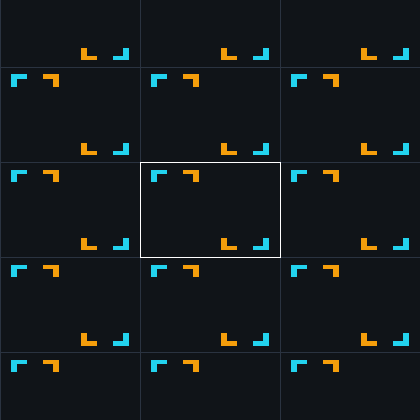
Mirrors one way, glides the other, half-turns between the mirrors.
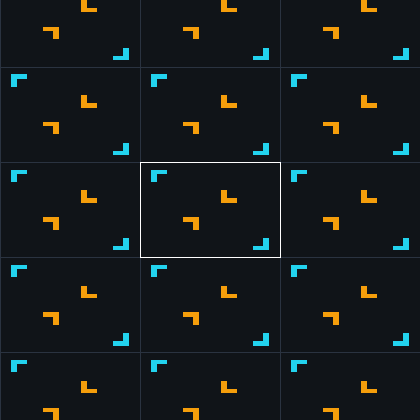
Glides both ways and half-turns, not a single true mirror.
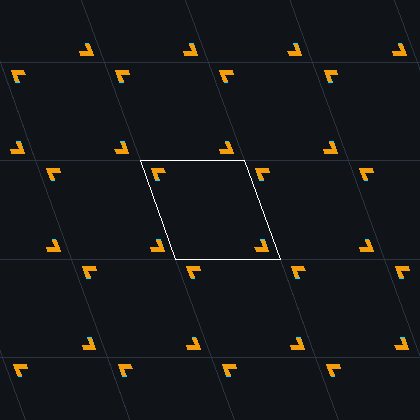
Mirrors both ways on a staggered lattice — the brick wall.
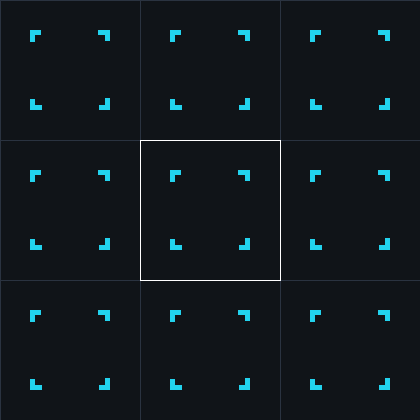
Quarter-turns with no mirrors: pinwheels on a square lattice.
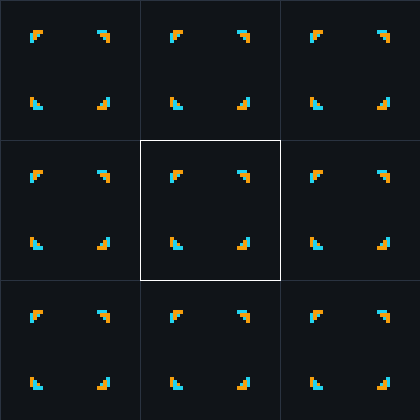
The square grid and the checkerboard — the most common pattern on Earth.
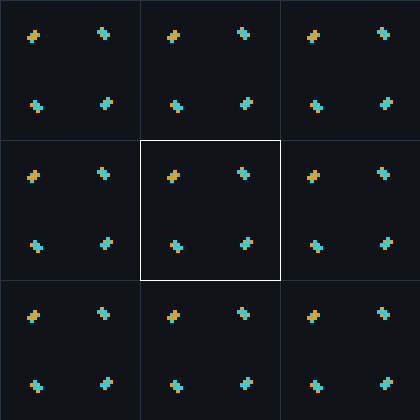
Basket weave: 4-fold centers that no mirror passes through.
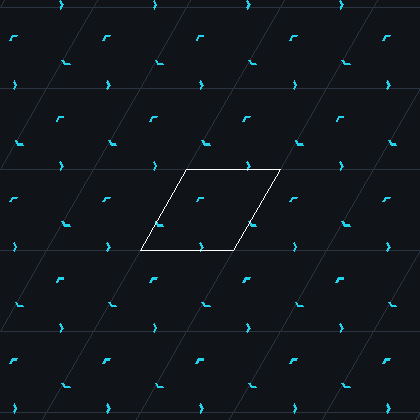
Three-fold rotations and nothing else — Escher's lizards.
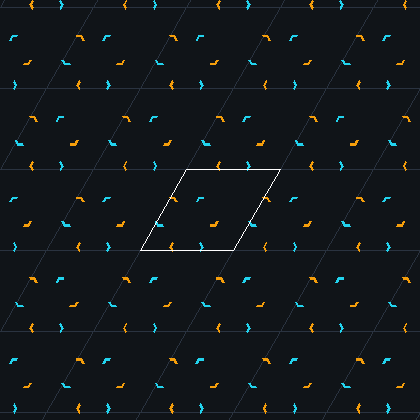
Three-fold centers that all sit on mirrors.
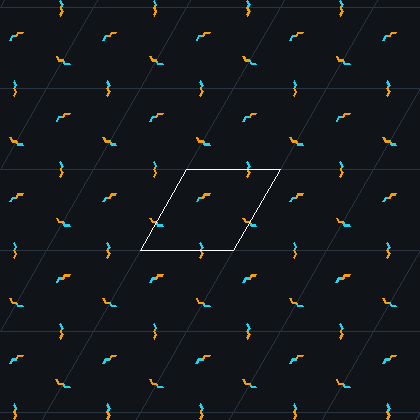
Three-fold centers, some of them off the mirrors.
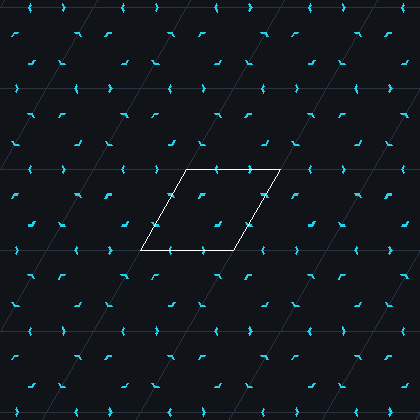
Six-fold rotation, no mirrors: hexagonal whirls.
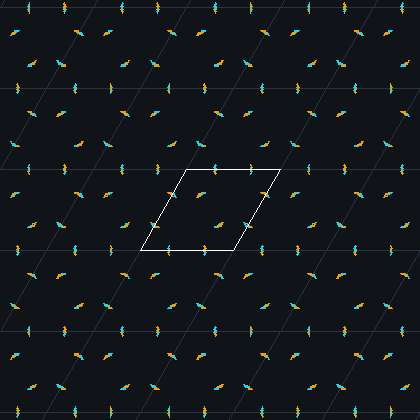
The honeycomb and the triangular tiling — the full hexagonal symmetry.
Then there are the 7 frieze groups for borders and strips, the rosette groups for medallions and mandalas, and the guides: how to identify a pattern by eye, why five-fold symmetry can't repeat, what symmetry a brick wall has, and more.